With electrification, intelligence, and connectivity now becoming essential to vehicle safety and development, rather than just value-added features, carmakers are seeing a greater need to integrate new systems as standard offerings in new models. The rapid uptake of new energy vehicles (NEVs), particularly in China, has contributed to this shift, making software-defined vehicles the mainstream choice for both automotive brands and car owners. In the first half of 2026, NEVs accounted for nearly half of all new vehicle sales in China, with 67 percent of them being electric vehicles (EVs)[1]. In this context, a new layer of tech companies has emerged across the automotive industry, supplying critical components, software, operating systems, and innovations to carmakers.
To explore how these players are shaping high-tech vehicle development, Messe Frankfurt spoke with Mr Jie Lu from EVPT and Mr Michael Zhao from Smarter Eye to get their perspectives on how the industry is evolving to meet market expectations. Both companies have achieved “Little Giant” status, a prestigious recognition of SMEs in China with strong innovative capabilities and the potential to contribute positively to industrial supply chains.
“Problem solving drives product evolution and innovation” — Smarter Eye (Beijing Smarter Eye Technology Co Ltd)
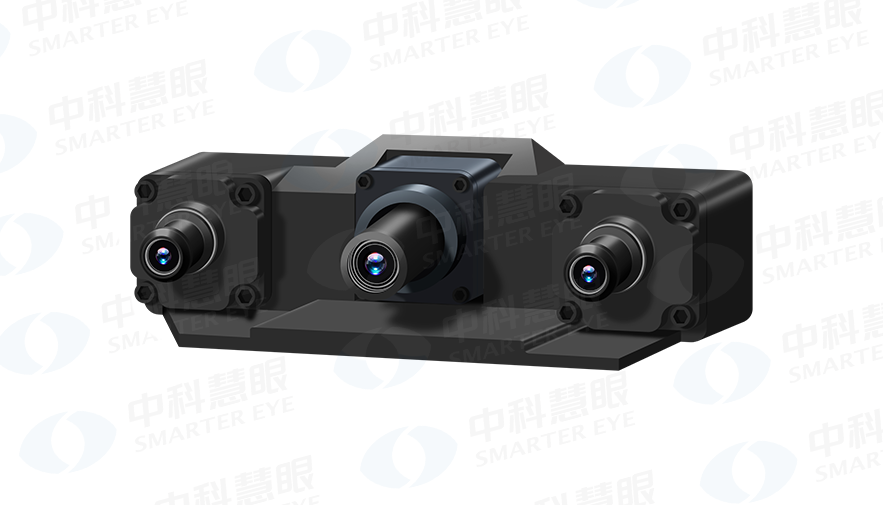
SmarterEye’s leading product — automotive grade binocular stereoscopic vision sensors.
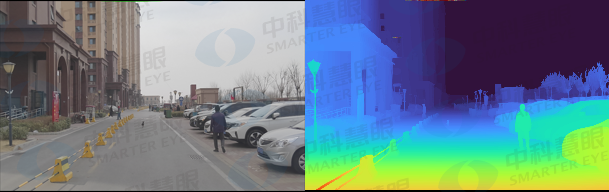
Established in 2014, Smarter Eye had an early acceptance of AI to create products grounded in automobile intelligence, leveraging this technology to make travel smarter and safer. The company provides vehicle-mounted 3D environment perception solutions and active safety systems. Its sensors serve as key component for ADAS and autonomous vehicles, acting as the “eye” of the car transmitting real-time road data to onboard self-driving algorithms. Smarter Eye possesses end-to-end capabilities in stereo camera hardware, structural design, software design, algorithm development, manufacturing, and pre-sales and after-sales services.
One advantage the company holds, as Deputy General Manager, Mr Michael Zhaodescribes, is the involvement in the process to build and install these sensors into cars right from the very beginning of the design cycle.
Backed by a leadership team consisting of technical experts with experience at top domestic and international firms, Mr Zhao believes this core understanding of the automotive manufacturing lifecycle contributes to an edge in driving innovation and quality. To date, Smarter Eye technology has been deployed in over 40 autonomous driving projects, ranging from pilot programmers to onboard ADAS systems in vehicles, enabling real-world road testing and validation.
Mr Zhao also shared his opinions on the company’s role in the automotive value chain: “As a technological firm, our role is to transform the findings and breakthroughs from the laboratory into real life applications, and OEMs were the ones bringing them together and have them pushed to the market. However, with competition in the domestic market now getting fiercer and consumers are turning to value more about the vehicle’s functionality and benefits, carmakers are more pragmatic in their approaches towards product development, they are now turning to use technology to improve the overall user experience.”
When asked about this company’s positioning and how does it help further application for emerging technologies, he said:
“As an innovator, we work closely with car manufacturers and researchers to solve problems older technologies couldn't fix. For instance, when working on a autonomous driving vehicle project, the manufacturer discovered that our dual-camera sensors were more superior in collecting relative distance data and spatial analysis that their single-camera lens sensors.”
“Innovation through new demands and evolving supply chains” — EVPT (Tianjin Yidingfeng Powertrain Technology Co Ltd)
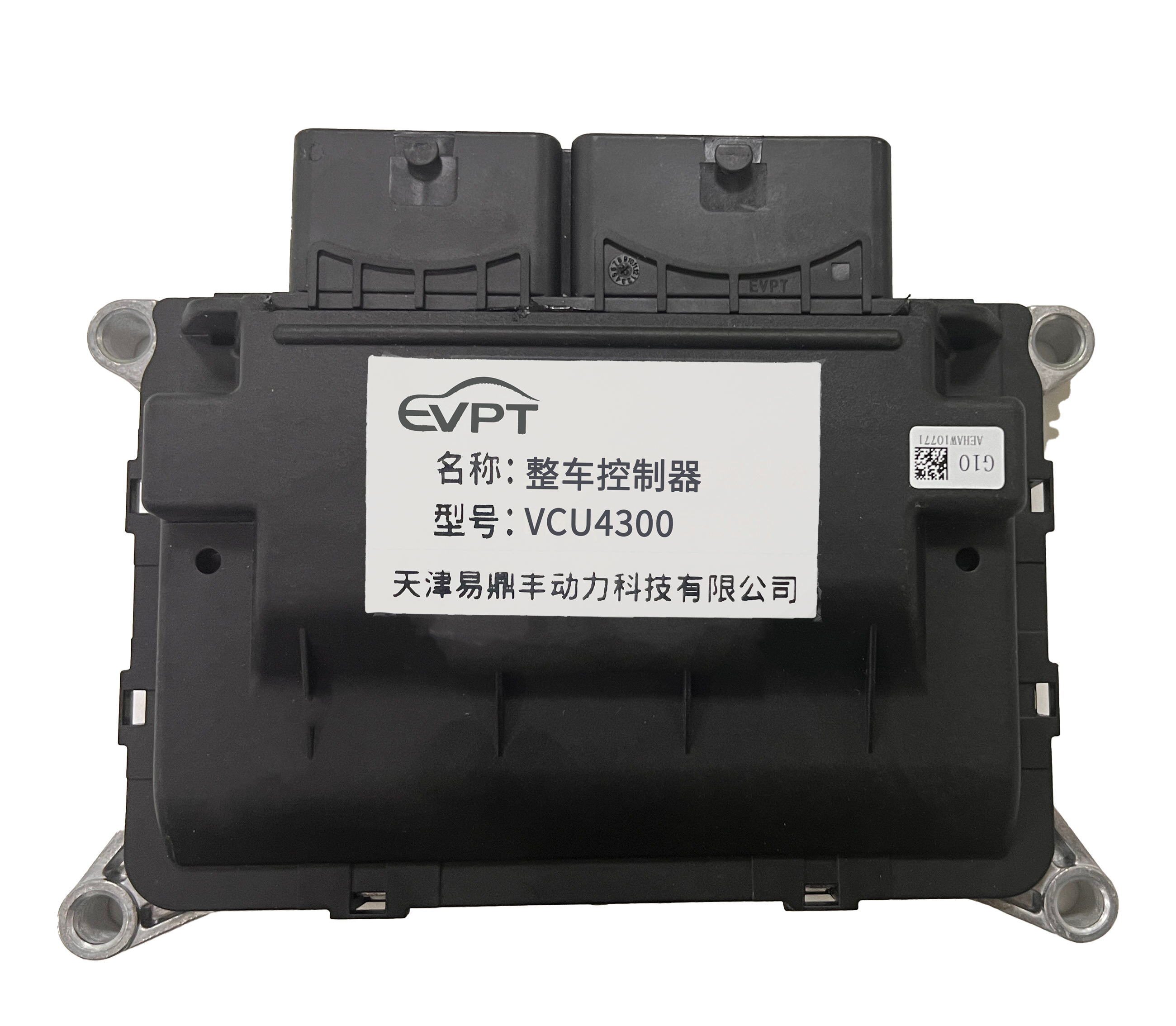
A Vehicle Control Unit (VCU) manufactured by EVPT.
A relatively young player, EVPT is a firm that focuses heavily on R&D and manufacturing of domain controllers for NEVs and intelligent connected vehicles. This includes designing, testing and manufacturing Vehicle Control Units (VCUs); the central computer of a car, particularly new energy vehicles, that manages the powertrain, energy flow, safety systems and other driver inputs. It receives primary signals from the vehicle’s perimeter, such as braking or acceleration requests, and instantly translates them into precise orders for the electric powertrain and drive systems to execute.
The company also offers battery management systems, thermal management modules, transmission control units, body control modules and construction machinery control units.
“Our electric and intelligent vehicle controllers enables a car’s smart driving functions to execute seamlessly”, said Mr Lu. “Based on that foundation, we deliver a customised design for every single project, working directly with auto manufacturers to meet customer needs.”
Since the company being founded in 2016, EVPT has moved quickly to establish their own assembly lines and independent R&D facility. This suite allows the team to handle everything from initial design to final in-house testing, enabling them to diagnose and resolve complex onboarding issues internally during the vehicle integration phase without involving outside consultants and factories.
Mr Lu also highlighted the deeper collaboration required across the supply chain to advance the automotive industry as a whole.
“In China, EVs have become the absolute mainstream. It is upheld by the country’s position as the world’s most complete EV supply chain, with growing domestic ecosystems for batteries, motors, electronic controls, and automotive-grade chips. To maximise this ecosystem, automakers and specialised suppliers are establishing clear, complementary roles: OEMs increasingly focus on developing high-level application software in-house, while relying on specialised partners like EVPT to handle complex hardware design and underlying basic software.”
“Because software and hardware must now be developed simultaneously rather than in isolation, the traditional linear supply chain is restructuring into an interconnected network. As its breadth and depth expand, the ecosystem is becoming more close-knit, compelling players that may not have needed to interact previously to collaborate in new ways to meet market demand.”
Where do these innovators come in as the accelerator for new technologies on vehicles?
To support carmakers in the shift toward smarter, high-quality vehicles, tech companies are handling every phase of development within their specialised niches under one roof. By offering fully customisable solutions tailored to the specific needs or requirement, these suppliers allow car manufacturer to integrate the hardware and software directly into the vehicle’s design from the start. This evolution is driving deeper collaboration across the industry through partnerships, joint ventures, or new supply chain configurations.
This shift has given rise to the concept of the of Tier 0.5 suppliers; seen as a new and very close partnership between carmakers and Tier 1 suppliers, it moves beyond traditional procurement relationships toward agile integrated development.
Automakers engage these suppliers to act as an early catalyst for deploying new technologies to vehicles. By participating in the very initial stages of product design process, these innovators are capable of delivering the hardware components and underlying software crucial to intelligent connected vehicles and NEVs.
As these two examples demonstrate, Tier 0.5 suppliers provide important smart transformation capabilities that make them essential to the automotive industry, carrying key benefits such as improved production efficiency, cost reduction, and shorter development cycles. This trend provides an insightful look into China’s automotive landscape and signals a globally significant shift that opens up opportunities for ongoing innovation and growth.
Automechanika Shanghai 2026 – a platform for driving innovation and collaboration
These are just some of the stories that you will find at Automechanika Shanghai. The fair will take place at the National Exhibition and Convention Center (Shanghai) from 2 to 5 December 2026. This edition expects to welcome over 7,600 exhibitors showcase and feature over 100 concurrent events to stand as one of the most influential exhibitions globally catering to the full automotive supply chain. Year-round support includes a series of supply-and-demand matchmaking activities held before and during the show, creating efficient channels for connecting vehicle manufacturers, parts suppliers, and innovative technology companies.